

There comes a point in a lot of people’s lives when the house that once made perfect sense starts to feel like an argument you are no longer having.
The bedrooms nobody sleeps in. The yard that used to be something and now mostly just needs attention. The neighborhood you have outgrown quietly, without quite knowing when it happened.
For a lot of the people I work with, that realization arrives alongside a bigger question: what if we just moved somewhere we actually wanted to be?
Asheville and Western North Carolina are where a lot of those conversations land. Downsizing to Asheville, NC is a genuinely good decision for the right person. But “downsizing” is a word that contains more complexity than it first appears, and the people who navigate it most smoothly are usually the ones who went in with clear eyes.
Here are seven things worth knowing before you make the move.
1. Downsizing Is a Choice, Not a Compromise
The word “downsizing” carries emotional weight that it does not quite deserve. For a lot of people, it suggests settling, of less, of retreat, of something ending.
What it actually is, when it is done intentionally, is an edit.
You are not giving something up. You are choosing what you actually want to bring forward into the next chapter of your life. The people I have worked with who are happiest after downsizing are not the ones who minimized what they let go of. They are the ones who got clear about what they were choosing.
That shift in framing matters. It changes what you hold onto and what you release. It changes how you approach the search for your next home. And it tends to make the whole process feel less like loss and more like direction.
2. Mountain Homes Are Built Differently, and That Is Worth Understanding
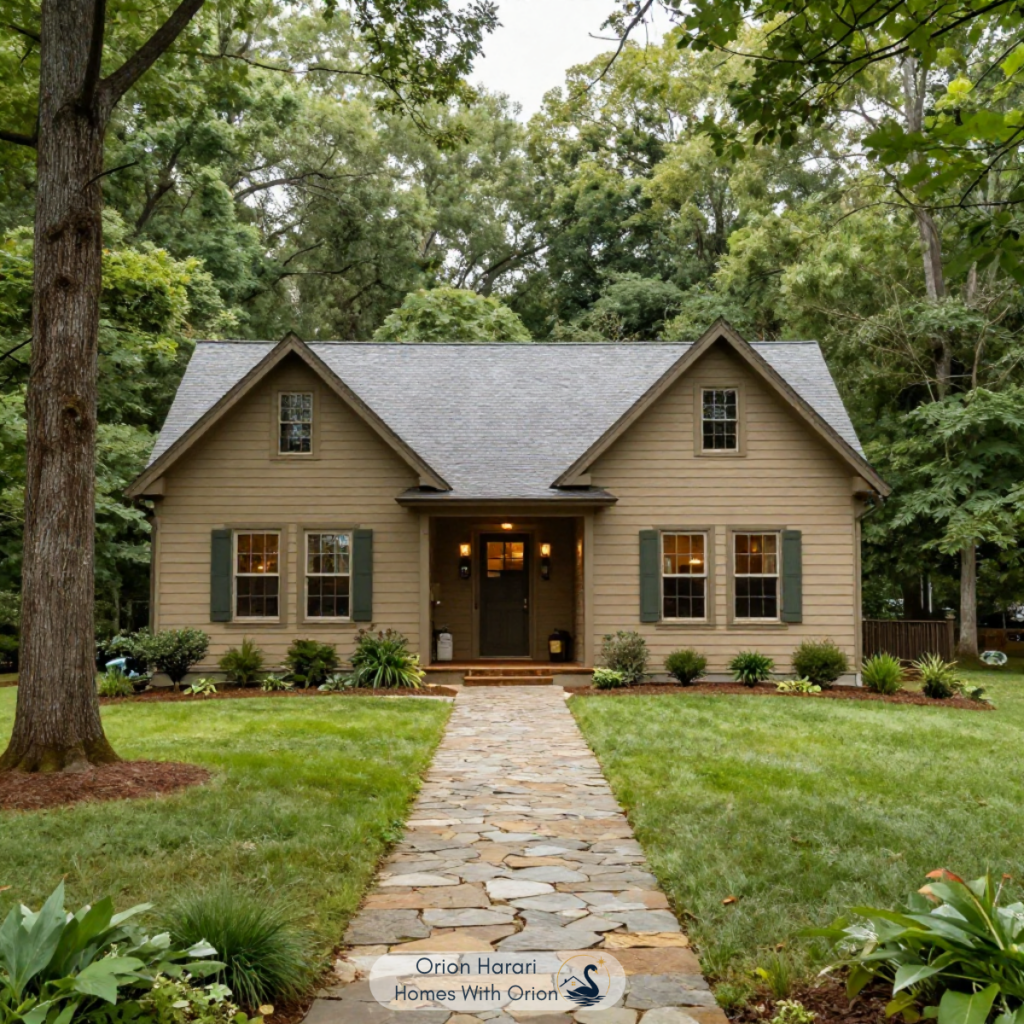
Most people downsizing to Asheville, NC are arriving from suburban homes in flatland cities. Ranch houses. Colonials. Homes built on level lots with attached garages, finished basements, and closets in every room.
Mountain homes are a different kind of animal.
Lots are often sloped, sometimes dramatically so. Many older mountain homes were built in eras when storage was not a design priority. Crawl spaces are more common than basements. Decks and outdoor living areas often substitute for interior square footage. Driveways can be steep. Gravel roads are not unusual outside the city proper.
None of this is a problem. It is just a different relationship with the physical environment, and it is one worth understanding before you fall in love with a listing. A home that photographs beautifully can have a driveway that requires real confidence in winter. A cozy floor plan can reveal its limitations once your furniture arrives.
When you are downsizing to a mountain home, you are not just buying less square footage. You are buying into a different physical experience of daily life. For most people, that is part of the appeal. Just go in knowing what you are choosing.
3. What You Bring Matters More Than How Much You Bring
This is the part of downsizing that catches people off guard more than the square footage does.
A 2,800 square foot suburban home that has been lived in for twenty years accumulates a particular density of things. Furniture scaled to large rooms. Art collected over decades. The dining set that seats twelve. The books. The tools. The guest room furniture for grandchildren who are now adults.
When you move into a 1,500 square foot mountain home, what you bring shapes almost everything about how the home feels. Overscaled furniture in a smaller space does not just look wrong. It changes how the room functions, how light moves through it, how you actually live in it.
The most useful work you can do before a downsize is not packing. It is editing. Deciding what earns a place in the next chapter based not on sentiment alone, but on whether it fits the life you are actually building. Some of that process is logistical. Some of it is genuinely emotional. Both are worth taking seriously.
4. The Budget Picture Often Surprises People, in a Good Way
One of the most common reactions I hear from people who have done the math on downsizing to Asheville, NC is quiet surprise at how favorably it compares to where they are leaving.
If you are selling a larger home in a higher-cost metro area, the equity you have built often translates into meaningful purchasing power here. A well-maintained home in Asheville or in the surrounding towns can be purchased outright, or with a very manageable mortgage, depending on your situation.
North Carolina’s tax environment adds to the picture. The state does not tax Social Security income. The flat income tax rate is approximately 4.5%. Property taxes in Buncombe County carry an effective rate of about 0.63% of assessed value. For people downsizing from states with aggressive income and property tax structures, the annual savings are real and compounding.
Asheville is not inexpensive by regional standards. Median home prices are around $500,000 to $515,000 as of 2026. But for many people making this move, the combination of home sale equity, a lower ongoing cost of living, and a tax environment that favors retirement income makes the math work better than expected.
5. Outdoor Living Becomes Part of Your Home
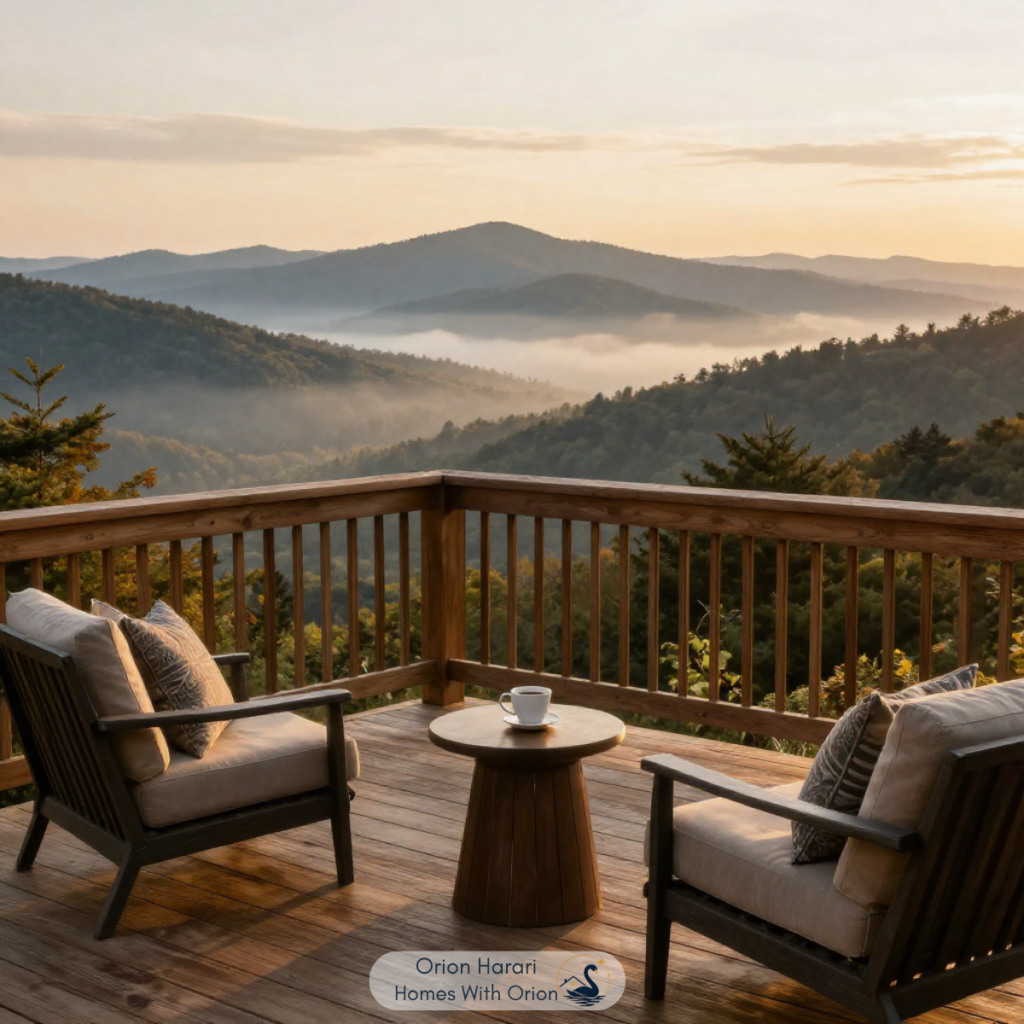
When you move to the mountains in Western North Carolina, something shifts in how you think about space.
The outdoors is not an add-on here. It is part of the square footage equation. A home with a smaller interior footprint but a covered deck, a mountain view, and trail access within walking distance is not a compromise. For most people who make this move, it is the point.
The Blue Ridge Mountains are literally outside your door. Summers are mild enough to spend real time outside from May through October. The fall season is one of the most extraordinary natural experiences the region offers.
When you are evaluating homes, it is worth thinking about outdoor space as intentionally as you think about interior space. A smaller home with a thoughtfully designed outdoor area can live much larger than its square footage suggests. Many people who downsize here find they spend more time on their deck or porch than in any room inside.
6. Timing the Sale and the Purchase Requires Real Coordination
Downsizing to Asheville, NC is not just one real estate transaction. For most people, it is two, happening in different markets at the same time.
You are likely selling a home in one city while trying to buy in another. Asheville’s inventory can move quickly. Well-priced, well-maintained homes in desirable areas do not sit. If you are waiting until your current home is under contract before you begin seriously searching here, you may find that the homes you identified have already closed.
There are ways to navigate this well. Bridge financing. Contingent offers in certain market conditions. A thorough pre-approval that positions you to move when the right home appears. None of these are complicated solutions, but they require planning rather than improvisation.
The people who downsize most smoothly are the ones who start the conversation early, before the urgency is real, and who think through the sequencing carefully rather than treating it as something to figure out when the time comes.
7. The Right Help Makes the Whole Experience Feel Different
Downsizing to a new city, in a market you do not know, while managing the emotional and logistical weight of a major life transition, is a lot to carry alone.
What a good local agent brings to this is not primarily access to listings. You can find listings. What they bring is genuine knowledge of the specific market dynamics that are not visible from the outside, an honest read on which homes are worth your time, and an understanding of what this process actually feels like from the inside.
For people downsizing to Asheville from out of state, I think of my role as part real estate agent and part local guide. The questions people have are rarely just about square footage. They are about what the drive to the grocery store is like. Which neighborhoods have sidewalks. Whether the property will be manageable in ten years, not just right now.
Those questions deserve real answers. If you are thinking about making this move, I am happy to have that conversation before you are ready to do anything else. That is exactly the kind of conversation I am here for.
Frequently Asked Questions About Downsizing to Asheville, NC
Is Asheville NC a good place to downsize?
For the right person, genuinely yes. Asheville and the surrounding Western North Carolina region offer a compelling combination of natural beauty, cultural depth, mild climate, and a tax environment that works well for retirees and people on fixed incomes. The considerations that matter most are housing costs relative to where you are coming from, comfort with mountain terrain, and the logistical coordination of selling and buying across different markets.
What is the average home price when downsizing in Asheville NC?
The median home price in Asheville is approximately $500,000 to $515,000 as of 2026. Well-maintained smaller homes in desirable neighborhoods can be found below that figure. The surrounding towns, Weaverville, Black Mountain, Waynesville, and Hendersonville, consistently offer lower price points while still providing strong access to everything the broader region offers.
Should I sell my home before buying in Asheville?
This is the central logistical question for most people downsizing to Asheville from out of state. The market here moves quickly enough that waiting until your current home is sold can put you at a real disadvantage. Many buyers explore bridge financing or position themselves with a strong pre-approval so they can move competitively when the right home appears. Talking through the sequencing with a local agent early is one of the most valuable things you can do.
How do I decide what to keep when downsizing?
The most useful frame is to ask whether each item earns a place in the life you are building, not the life you are leaving. Furniture scaled to a larger home often does not translate well to smaller mountain properties. The editing work is best done before you begin seriously searching, so that your next home can be designed around how you actually want to live rather than what you already own.
What are the best areas near Asheville for downsizing?
The surrounding towns each have a distinct character worth exploring. Weaverville is quiet and residential with a strong sense of community. Black Mountain has a small-town feel with genuine warmth. Waynesville offers a mountain town character with somewhat lower price points. The right area depends on how you want your daily life to feel, and a conversation with a local agent who knows these communities well is the most efficient way to narrow it down.
What Downsizing Actually Means
The homes I have seen people settle into most happily after downsizing are not the ones with the most clever storage solutions or the most precisely scaled furniture.
They are the homes where the people inside made a deliberate choice about what the next part of their life was going to look like. Where the square footage was not a concession to practicality but an expression of intent.
Downsizing to Asheville, NC is not about having less. It is about having the right things, in a place that earns its space in your life every single day.
If you are thinking seriously about making this move and want to understand what the process actually looks like, I am happy to talk. No pressure and no pitch. Just a real conversation about whether this place might be right for where you are headed.
Orion Harari
Homes With Orion
Thoughtful relocation guidance for Western North Carolina